How can anyone date something 3,500 years ago?
You start from a date nobody disputes, then count backward using numbers you trust.
The Tanach never says "the Exodus happened in 1446 BCE." Nobody in the ancient world counted years that way. What it does give is a chain of numbers: how many years each king reigned, how long Solomon's Temple stood, and how long it was from the Exodus to the Temple. To turn that chain into calendar dates, we need to pin at least one link to a year we know for certain.
Israel's neighbors provide those pins. Assyria and Babylon kept careful year-by-year records, their dates are fixed independently of the Bible, and several of them name kings of Israel and Judah:
Why those dates can be trusted. Assyria didn't number its years. Each year was named after the official who held a special one-year office that year, the way we might say "the year Smith was mayor," and documents were dated by that name. Scribes kept the list of those names, in order, for more than 250 years. One entry mentions, in passing, an eclipse of the sun. Astronomers can calculate exactly when that eclipse was seen in Assyria: 15 June 763 BCE. That pins the whole list to the calendar, and with it the years of Qarqar and Jehu's tribute, accurate to within about a year. Babylon's kings are dated the same way. A list of their reigns, preserved by the astronomer Ptolemy, runs from 747 BCE to the time of Alexander the Great, and records from the kings' own time confirm it. Babylonian scribes also dated their observations of the moon and planets by the king's year, and those can be checked against the sky.2
And they all agree. These records were kept separately, and they check one another. Several Assyrian kings also ruled Babylon, so they appear in both the Assyrian lists and Ptolemy's, and Babylonian tablets that record eclipses of the moon confirm Ptolemy's list. Lay the Tanach's kings on top, and each meets the right foreign king at the right time: Ahab and Jehu with Shalmaneser III of Assyria, Hezekiah with Sennacherib, and Jehoiachin with Nebuchadnezzar of Babylon.
Who worked out the dates of Israel's kings?
Mostly one scholar, Edwin Thiele, using the numbers in the Tanach itself.
The problem. Kings and Chronicles give the length of every reign in Judah and Israel. They also cross-reference the two kingdoms: In the seventeenth year of Pekah son of Remaliah, Ahaz son of King Jotham of Judah became king
(2 Kings 16:1). For centuries, those numbers seemed not to add up. Totals came out a year too long here, two years there. Many scholars decided the numbers were unreliable, invented or garbled by later editors.
The man who solved it. Edwin R. Thiele (1895–1986) was an American Bible scholar who had spent twelve years as a missionary editor in China before earning a doctorate in biblical archaeology at the University of Chicago in 1943. His dissertation became The Mysterious Numbers of the Hebrew Kings (1951). Instead of assuming the numbers were wrong, he asked how the ancient court scribes actually counted.3
What he found. The two kingdoms counted differently. Israel counted a new king's first part-year as "year one"; Judah called it his accession year and started "year one" at the next New Year. Israel began its year in the spring month of Nisan, Judah in the autumn month of Tishri. And sometimes a son ruled alongside his father for a few years, so their reigns overlapped. Once you account for those three things, the numbers fit together.
Ahab's son Ahaziah became king in the seventeenth year of King Jehoshaphat
and reigned over Israel two years
(1 Kings 22:52). Yet his brother Jehoram took over in the eighteenth year of King Jehoshaphat
(2 Kings 3:1). Two years on paper, about one in reality, because Israel counted the first part-year as a full year.
When we lay Thiele's reigns on top of the Assyrian timeline from Question 1, we see a striking match. Assyria's records, written by Israel's enemies, confirm the corrected count to the year. Ahab fought at Qarqar in his last year, and Jehu paid tribute in his first.3
Why his dates are trusted. Thiele derived his counting methods inductively from the Tanach's cross-reference discrepancies, using Assyrian dates only as anchors, not to force-fit the text. Several finds published after his work confirmed it, and later scholars such as Kenneth Kitchen corrected a point he had missed — an overlap between the reigns of Ahaz and Hezekiah — clearing up a place where Thiele had decided the Tanach's numbers were wrong. His framework is the usual starting point for the subject. In the words of the Assyriologist D. J. Wiseman:
"The chronology most widely accepted today is one based on the meticulous study by Thiele."D. J. Wiseman (1993)3
Thiele wasn't working on the Exodus at all. His book is about the kings who came after Solomon, and he never used 1 Kings 6:1. His date for Solomon comes from counting backward. He started from the fixed Assyrian years, such as Ahab at Qarqar in 853. From there he added up the Tanach's reign lengths, king by king, back to the split of the kingdom after Solomon died, in 931 BCE. Solomon reigned 40 years before the split, so his 4th year, when he began the Temple, was 967 BCE. That matters: the Tanach says the Exodus happened 480 years before the 4th year of Solomon's reign.
So when was the Exodus?
The Tanach tells us exactly how long before the Temple it was.
"In the four hundred and eightieth year after the Israelites left the land of Egypt … in the fourth year of his reign over Israel, Solomon began to build the House."1 Kings 6:1
Jewish tradition takes this verse at its word — the 480 years are literal. Seder Olam Rabbah, the classic 2nd-century rabbinic chronology, counts exactly 480 years from the Exodus to the Temple (it reaches a different Exodus date for a totally unrelated reason, explained in Question 6).4
Only those who prefer a 13th-century Exodus need the number to mean something else. Their argument goes like this: 480 is 12 × 40. They say the writer wasn't counting years at all; he was counting 12 generations and gave each one a symbolic 40 years. A real generation is closer to 25 years, so 12 would come to about 300, putting the Exodus around 1267 BCE, under Ramesses II. But the reasoning runs backward: it starts from a 13th-century date reached on other grounds (Question 7) and reinterprets the 480 years to fit. The Tanach's own family trees also count far more than 12 generations in this period (see Heman's, in Question 4).
What about the Septuagint's 440?
A few ancient sources give a different figure than 480. Most manuscripts of the Septuagint, the ancient Greek translation of the Tanach, read 440 instead. Josephus, the 1st-century Jewish historian, gives 592 years in one place and 612 in another (scholars have offered theories about how he arrived at each, but none is widely accepted). But the Hebrew text, known as the Masoretic Text, reads 480, as do most Christian Bibles. Of the major traditions, only the Eastern Orthodox churches follow the Septuagint here.
There are good reasons to trust the 480. Every known Hebrew manuscript has it, as do the ancient Aramaic Targum and Jerome's Latin Vulgate, both translated from the Hebrew; the 440 appears only in the Greek tradition, and even there some manuscripts read 480. The 440 may simply be a copyist's adjustment, either counting from the entry into the land rather than from the Exodus, or giving 40 years to each of the eleven priestly generations from Aaron to Zadok (1 Chronicles 5:29–34), the same reckoning of 40 years a generation behind the "12 generations" reading above.4 Either way, the variant is no help to either later date: even the Septuagint's 440 puts the Exodus in 1406 BCE, still nearly a century before 1313 and well over a century before 1270. And as the next question shows, several more clues in the Tanach align with the 480 count.
Does the rest of the Tanach support 1446?
Three distinct passages that never mention the 480 years land on the same dates.
1. Jephthah's "three hundred years"
When the king of Ammon demanded back the land east of the Jordan, the judge Jephthah answered that Israel had lived there for three hundred years; why have you not tried to recover them all this time?
(Judges 11:26). Israel took that land at the very end of Moses' life. Jephthah's own date comes from the book of Judges: the judges after him (Ibzan, Elon and Abdon), the forty years of Philistine rule and Eli's forty years put him roughly a century before David, who became king around 1010 BCE on Thiele's dates.
A different book, a different century, an offhand remark in a diplomatic argument, and it lands right around 1406, the conquest date that 1 Kings 6:1 gives with the literal reading of 480 years. On a 13th-century Exodus, Israel would have been in the land well under 200 years by Jephthah's time — so his comment (for three hundred years
) wouldn't have made sense.5
The book of Judges points the same way on its own. It gives the length of each period of oppression and each period of peace, from the first oppressor, Cushan-rishathaim, to the end of Samson's time. Added together, those numbers come to 410 years.6 Some periods overlapped. Samson's twenty years, for example, fell within the forty years the Philistines ruled Israel (Judges 13:1; 15:20), so the real span was shorter. Count only the periods before Jephthah, and they come to 319 years, close to his own three hundred
. Even so, Judges needs a long stretch of time between the conquest and the first kings. The early date leaves nearly four centuries before David. A 13th-century Exodus leaves barely two.
2. Heman's family tree
Chronicles traces Heman, one of David's Temple singers, back generation by generation to Korah, who rebelled against Moses in the wilderness (1 Chronicles 6:18–23). That's 19 generations from the Exodus to David's time:
This is a real family line, not a filler list. Number 17 is the prophet Samuel, and the names match his family as 1 Samuel gives it: his father Elkanah son of Jeroham, back to Zuph (1 Samuel 1:1), and his firstborn son Joel (1 Samuel 8:2).7 What about Ruth 4, which has only five generations from Nahshon, who lived at the Exodus, down to David? Short lists like that one are known to skip generations. The Tanach itself shows it: Ezra's family tree traces him back to Aaron (Ezra 7:1–5), but leaves out six names that the full priestly line in 1 Chronicles 5:29–41 includes. Chronicles, by contrast, traces Joshua, who lived at the Exodus, back ten generations to Ephraim (1 Chronicles 7:23–27). A real family list can leave people out, but it can't add people who never lived. So when two lists cover the same years, the longer one is the more complete.
This family tree also answers the "12 generations" argument from Question 3. That argument depends on there being only 12 generations between the Exodus and Solomon. But Heman's family tree covers nearly the same span with 19 generations, 18 father-to-son steps. So the Tanach's own records count far more than 12 generations in that period. At a normal 25 years each, those 18 steps are just what the literal 480 years require.
3. The Jubilee cycles
The Torah says to start counting the 49-year Jubilee cycles when you enter the land
(Leviticus 25:2). Two Jubilees can be pinned to real years, and Jewish sources record both of them:
Each tick is one 49-year cycle. The gold dots are the two Jubilees pinned by the sources, and the year of entry.
Ezekiel's Jubilee, 574 BCE. Ezekiel dates a vision to the beginning of the year, the tenth day of the month
, 14 years after Jerusalem fell (Ezekiel 40:1). The Talmud (Arakhin 12a) explains that the only year that begins on the tenth of the month is a Jubilee, which is proclaimed on Yom Kippur (Leviticus 25:9).8
Josiah's Jubilee, 623 BCE. Seder Olam records that Josiah's 18th year, when the Torah scroll was found in the Temple, was the beginning of a Jubilee
.9 On Thiele's dates for Judah's kings, as refined by Rodger Young, that year falls exactly 49 years before Ezekiel's: one full cycle by Rabbi Yehuda's opinion in the Talmud (Arakhin 12b; Nedarim 61a), which counts each Jubilee as the first year of the next cycle.10
Count back 16 more cycles from the cycle that began after Josiah's Jubilee, and the first one begins in 1406 BCE, the year 1 Kings 6:1 gives for the entry into the land. The Talmud itself (Arakhin 12b) runs the same check, counting back from Ezekiel's Jubilee. Working from its own dates for the kings, it had to start the count 14 years after the entry to make Ezekiel's year come out right. With today's dates for the kings, no adjustment is needed: the count starts at the entry, just as the Torah says (Leviticus 25:2).11 The cycles could have started in any one of 49 different years. They start in 1406.
All three clues put the entry into the land around 1406, which is what the Hebrew 480 gives. They also settle the Septuagint question from Question 3: its 440 would move the entry to around 1366, about 40 years off from Jephthah's 300 years and out of step with the Jubilee cycles.
Does the ground agree?
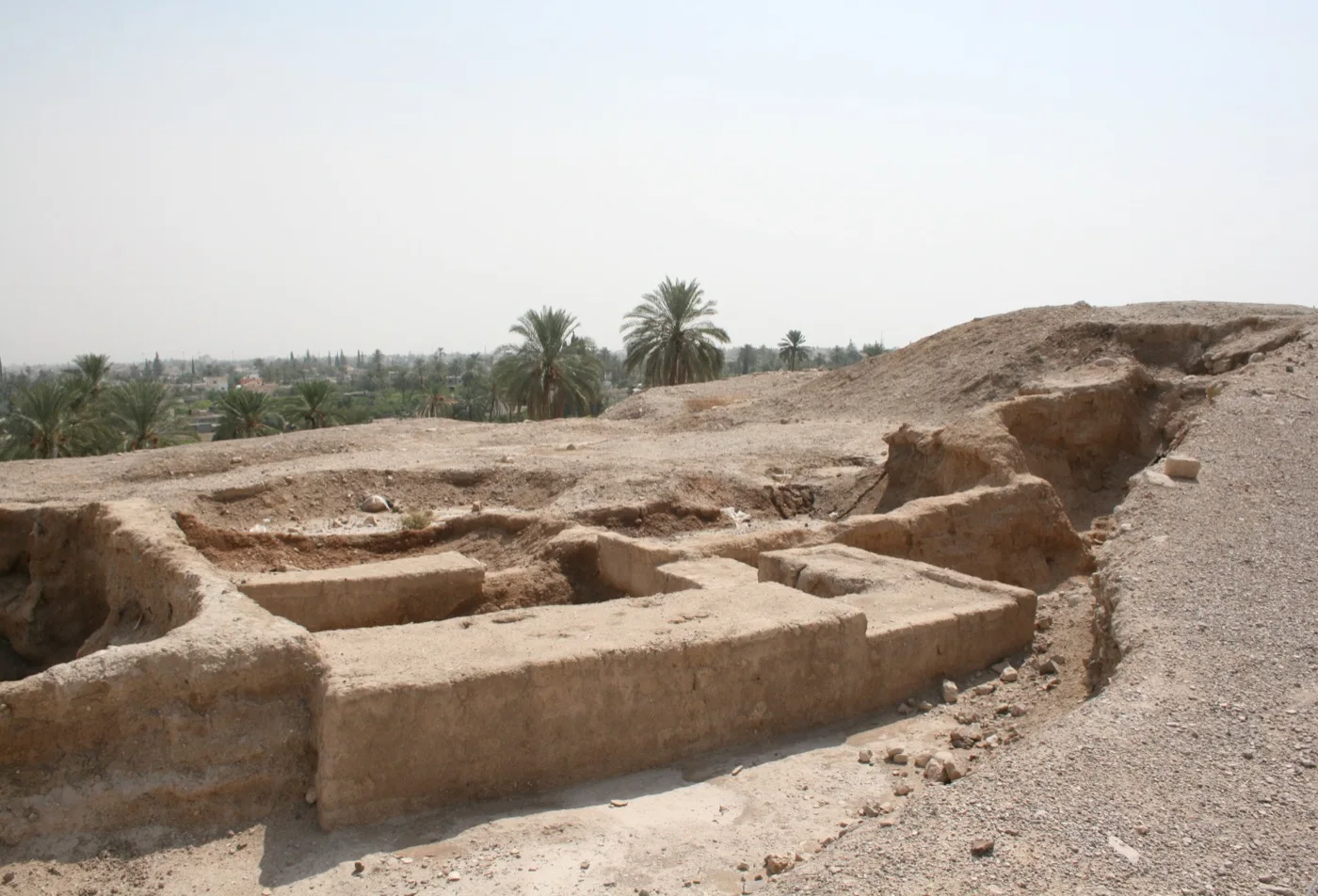
The Tanach says Joshua burned only three cities. All three show a fire at the right time.
Joshua is careful about this: All those towns that are still standing on their mounds were not burned down by Israel; it was Hazor alone that Joshua burned down
(Joshua 11:13), besides Jericho and Ai earlier. Israel was promised great and flourishing cities that you did not build
(Deuteronomy 6:10), and moved into them. So the conquest should leave only a few burned cities. That's what excavators found:
How to read it: each row is one clue. A dot is an exact year. A bar is the range of years that clue allows. Earlier years are on the left. The three lines are the three answers from the top of the page: solid gold for 1446, dashed for Seder Olam, dotted for the textbook date.
All five clues touch the gold line at 1446. The late date of 1270 doesn't come from any of these counts. Seder Olam's 1313 uses the same counts, but hangs them on a later date for Solomon, as Question 6 explains.
Jewish tradition says 1313. Why the difference?
Same 480 years, different starting point.
Seder Olam, the 2nd-century rabbinic chronology, and the historical timeline are closer than they look. Both read 1 Kings 6:1 literally: the Exodus came 480 years before the 4th year of Solomon's reign. They part ways mainly in one place, the length of the Persian era: the years Persia ruled over Judea, from Cyrus's conquest of Babylon, which ended the exile, to Alexander the Great's conquest of Persia. The historical record gives it about 207 years. Seder Olam gives the same stretch of history just 52, about a quarter as long.
Persia will have three more kings, and the fourth will be wealthier) as the full list, and treats Cyrus, Darius and Artaxerxes as names for one king.12
Shrinking the Persian era pulls everything before it closer to us. The First Temple's destruction, 587 BCE on the historical timeline, falls in 423 BCE on Seder Olam's, 164 years later. The Persian era accounts for 155 of those years; smaller differences in the periods on either side of it make up the rest.13 If the two timelines agreed on everything before the destruction, every earlier date would move 164 years too: the Temple's founding from 967 to 803 BCE, and the Exodus from 1446 to 1282.
But there's a second, smaller difference, and it pulls the other way. Seder Olam counts 410 years from the building of the First Temple to its destruction. It works through the Tanach's reign lengths king by king and overlaps them only where the verses point to it, such as the 25 years Jotham governed while his father Uzziah was a leper. Thiele, as we explained above, counts about 380 years for the same era, a difference of 30 years going in the opposite direction. This brings Seder Olam's Exodus date to 1313 BCE — the date traditional Judaism has accepted for centuries.
Both counts start from the same verses, but Thiele's has two checks Seder Olam's never had. His reconstruction makes the Tanach's own cross-references between Judah and Israel line up, and it lands exactly on years Israel's neighbors recorded, such as Ahab at Qarqar in 853 and Jehu's tribute in 841. Seder Olam worked from the verses alone, centuries before those Assyrian records were rediscovered, so it had nothing outside the text to test its overlaps against. Where the two disagree about the First Temple period, Thiele's 380 is the better guide.
Dates BCE, drawn to scale; the line skips 1270–1000 BCE.
What to notice. The two 480-year brackets (Exodus to First Temple) are the same length of time, because they're both rooted in the 1 Kings 6:1 verse. Each slanted line connects the same event on the two timelines and shows how much later Seder Olam puts it: the Temple's destruction 164 years later, its founding 134 years later (30 fewer, because Seder Olam's First Temple period runs 30 years longer), and the Exodus 133 years later.13
Nearly all of the difference, then, comes from the Persian era. The questions are why Seder Olam counts it so short, and which count matches the record. The rest of this section takes those up.
The Persian period
Where the 52 years come from. Seder Olam doesn't take its Persian years from outside records. It builds them from the Tanach alone. It counts only the Persian kings the Tanach names, and Rabbi Yose reads Daniel's "seventy weeks" (Daniel 9:24) as 490 years, from the First Temple's destruction to the Second's: 70 years of exile and 420 years of the Second Temple standing. Those 420 years then divide into 34 under Persia (the Persian years after the rebuilding; the other 18 came before it), 180 under Greece, 103 under the Hasmoneans and 103 under Herod. Once the Second Temple's lifetime is fixed at 420 years, there's no room for a long Persian period. Why the Sages counted this way is the question the commentators below take up.12
Why historians are sure of the longer count. The Persian kings left their own inscriptions, such as Darius I's account of his reign carved on the cliff at Behistun. Babylonian business records are dated by their reign years: one promissory note, dated to the 20th year of Darius I (502 BCE), names Tattenai, the governor who questions the Temple's rebuilding in Ezra 5. Greek and Roman historians recorded the same kings, and astronomical records tie them to the calendar.14 Some of the clearest evidence is Jewish: the Elephantine Papyri, letters and contracts from a Jewish community in Egypt, are dated by the reigning Persian king and trace a continuous line of kings from Xerxes to Darius II over more than sixty years.
Why Seder Olam's dates can't be the historical ones
Seder Olam's count of years deserves full respect. Traditionally attributed to Rabbi Yose ben Halafta, Seder Olam ("Order of the World") runs from Creation through the Second Temple, and the Jewish calendar's count of years (5787) and its reckoning of the new moon are built on it.15 For most Jews, its dates are simply the dates, and nothing here discounts it. But for the First Temple period, those dates can't be squared with the records the ancient world left. Put the Tanach's own events at Seder Olam's dates, and they collide with dated records from Assyria, Babylon and Persia:
Each of these records was written by Israel's neighbors, for their own purposes, and each is dated by its own reckoning, independent of the Bible. They agree with one another, and they agree with the Tanach's own sequence of events. They can't all be fitted to Seder Olam's dates. The Tanach's history is right. It's Seder Olam's starting point on the calendar that's off. That means reading Seder Olam's shorter Persian period as something other than a literal chronicle of history. Which begs the obvious question...
Is it legitimate to read Seder Olam this way?
Jewish scholars have discussed the Persian years for close to a thousand years, and their answers fall into three broad camps. The one this page follows has some of the greatest commentators behind it:17
Seder Olam wasn't meant as a timetable
Commentators who didn't take its short list of Persian kings as the complete historical record:
Seder Olam is right, and the historians are wrong
The Maharal and the Chazon Ish held that the tradition's own dates should be followed, not outside sources. In 2015 Rabbi Alexander Hool argued that much of the Persian period ran at the same time as the early Greek period, so the two have been counted end to end when they really overlapped. Rabbi Berel Wein uses the traditional dates in his histories.
The Sages shortened it on purpose
Rav Shimon Schwab suggested in 1962 that the years were left out to hide the date of the redemption, though he later withdrew the idea. Others suggest it was meant to make the "2,000 years of Torah" end with the Mishnah, or, as Rabbi Menachem Leibtag proposes, to make the Greek-era count of years used in Jewish documents begin exactly 1,000 years after the Exodus, a pattern the Vilna Gaon noticed.
Today's Orthodox world holds all of these views. The Da'at Mikra Tanach commentary, published by Mossad HaRav Kook, uses the historical dates, as did Rabbi J. H. Hertz in his Chumash.17 None of this touches the Jewish calendar: its count of years since Creation, still written on wedding contracts and gravestones, stays as it is. As Rabbi Saul Lieberman put it, a text has a truth of its own, separate from the historical record.18
Why do textbooks say 1270?
Mostly because of one word in Exodus 1:11.
For most of the 20th century, the Pharaoh of the Exodus was Ramesses II, in scholarship and in the popular imagination alike. In the 1930s William F. Albright, the most influential biblical archaeologist of his generation, argued for a 13th-century Exodus, pointing to Canaanite cities destroyed in that century. The textbooks followed, and so did Hollywood. Yul Brynner played Rameses opposite Charlton Heston's Moses in Cecil B. DeMille's The Ten Commandments (1956), and Ramesses was the Pharaoh again in The Prince of Egypt (1998) and Exodus: Gods and Kings (2014). For many people, that's simply what the Exodus looks like.
But the date's foundations soon began to crack. In the 1950s, Kathleen Kenyon's excavation at Jericho found no walled city there in the 13th century for Joshua to conquer, and later work at other sites raised similar problems.19 Yet the late date stayed in the textbooks. With its archaeological support in question, what anchors it in the Bible is a single word: Raamses.
Exodus 1:11 says the Israelites built the garrison cities (store-cities in other translations) of Pithom and Raamses. Ramesses II, who ruled Egypt in the 13th century BCE, built a great capital called Pi-Ramesses. So many scholars read "Raamses" as his city, place the Exodus under him, and treat the 480 years as symbolic, the "12 generations" reading from Question 3.
That one word has to carry a great deal. To put the Exodus in 1270, it has to outweigh everything else on this page: the Tanach's own count of years, the clues that agree with it, the ground in Canaan, and Egypt's own records of Israel. And it isn't even clear the word points to Ramesses II at all.
1. The word itself is weak evidence
The Torah uses the same name for an earlier time. Genesis 47:11 already calls the area where Jacob settled the region of Rameses
, centuries before any king of that name, and no one moves Jacob into the 13th century. If the name can't date Jacob, it can't date the Exodus either. It may simply be the familiar later name for an older place, the way we'd say Julius Caesar conquered France.
How could a text from Moses' time use a name from later on? The Torah does the same thing elsewhere. Abraham chases the kings as far as Dan
(Genesis 14:14), yet the town only got that name centuries later, in the days of the Judges: they named the town Dan … Originally, however, the name of the town was Laish
(Judges 18:29). There are two ways to understand this:
On either view, the name would tell us what the place came to be called, not when the events happened. Ramesses II built his capital beside the old Semitic city of Avaris, the place Manetho, an Egyptian priest who wrote a history of Egypt in the 3rd century BCE, connected with the Israelites.20
The link to Ramesses II is less certain than it looks. Scholars still debate where Pithom was, and one leading candidate, Tell el-Maskhuta, was mostly settled centuries after Ramesses II. Names built on the same root as his, such as Ramose, were in use before he took the throne. Most scholars do identify Raamses with Pi-Ramesses, but that's a likely identification, not a firm date.21
2. It overrides the Tanach's own numbers
1 Kings 6:1 gives 480 years from the Exodus to Solomon's Temple, and the late date has to read them as symbolic (Question 3). It then has to explain away each of the separate clues in Question 4 that land on the same years: Jephthah's 300 years, Heman's 19 generations and the Jubilee cycles. Each comes from a different book, written for a different purpose, and none of them points to the 13th century.
3. The ground doesn't fit
At Jericho and Ai, excavators have found no city in the late 13th century for Joshua to conquer. The three cities the Tanach says Joshua burned, Jericho, Ai and Hazor, show fires around 1400 instead (Question 5). Hazor also burned again in the 13th century, and late-date scholars credit that fire to Joshua. Early-date scholars link it instead to Israel's later war against Hazor's king, Jabin, in Deborah's time (Judges 4), though the text never says the city itself was burned then. And some of the 13th-century destructions Albright relied on have since been redated to the early 12th century, too late for a conquest after a 1270 Exodus.22
4. Israel is already in Canaan
On the late date, Israel leaves Egypt around 1270, spends 40 years in the wilderness and enters Canaan around 1230. Yet by 1208 BCE Pharaoh Merneptah lists Israel as a people in Canaan, alongside Ashkelon and Gezer, worth boasting of having defeated. That leaves barely 20 years for a conquest and settlement.
A disputed inscription may push Israel's presence back further. On a fragmentary Egyptian statue pedestal in Berlin, next to the names Ashkelon and Canaan, some Egyptologists read a third name as Israel; others reject that reading. Its defenders date the list to the reign of Amenhotep II or Amenhotep III, roughly 1425 to 1350 BCE: around or soon after Israel's entry into Canaan on the early date (c. 1406), and more than a century before a 1270 Exodus. If they're right, the Berlin Pedestal shows Israel already known as a people in Canaan long before the late date allows.23
What was happening in Egypt and Canaan?
With 1446 as the Exodus, here is the Tanach's story beside what Egypt, Canaan and the empires left behind.
Egypt's dates for this period are known to within about 25 years. This list uses the "high" dates; on the "low" dates the pharaohs shift two or three decades later, but the Exodus still falls among the same family of 18th Dynasty kings, two centuries before Ramesses II.24 Gold rows are the anchor dates from the questions above.